Food & Drink · Soup 국물
The Korean cure is a bowl of soup
After a long night, on a birthday, in the cold, even in the heat: there is a Korean soup for it.
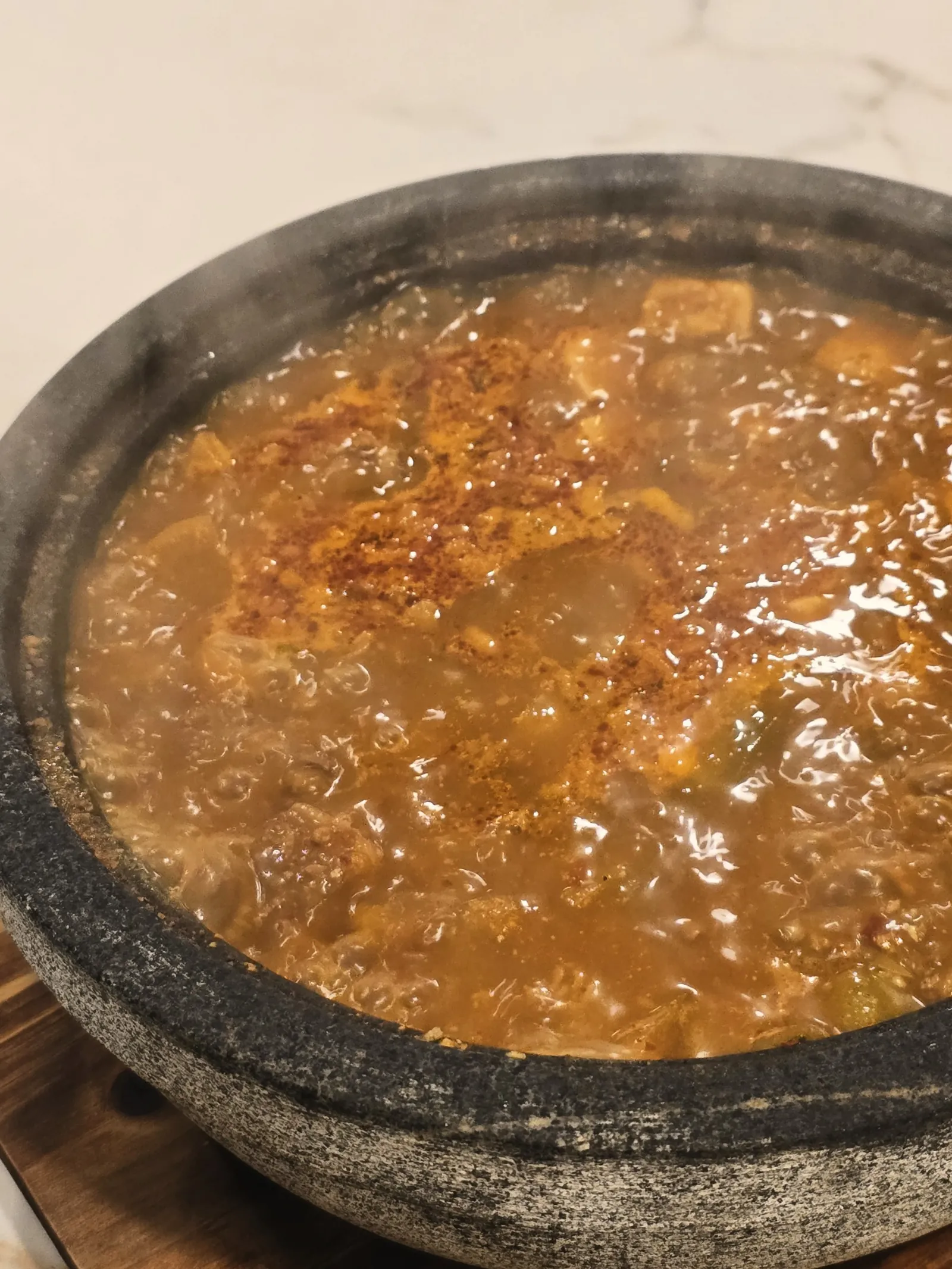
Koreans reach for soup the way other people reach for medicine. There is a whole vocabulary for it. Guk is a lighter soup served with rice; jjigae is a thicker stew that arrives still bubbling; tang is usually simmered long and slow.
- Haejangguk 해장국The morning after. A hearty soup eaten to recover from last night’s second round.
- Miyeokguk 미역국Seaweed soup, eaten on birthdays and by new mothers. “Did you eat your miyeokguk?” means happy birthday.
- Seolleongtang 설렁탕Milky ox-bone soup. It comes unseasoned: add salt and green onion yourself.
- Kimchi-jjigae 김치찌개Kimchi stew, best with old, sour kimchi. Home cooking at its most honest.
- Samgyetang 삼계탕Ginseng chicken soup, eaten on the hottest days of summer. The idea: fight heat with heat.
Questions readers ask
What is the difference between guk, jjigae and tang?
Guk is a lighter, brothy soup eaten with rice. Jjigae is a thicker, saltier stew, usually shared. Tang is often a long-simmered soup, such as seolleongtang or samgyetang.
Why do Koreans eat seaweed soup on birthdays?
Mothers eat miyeokguk after giving birth, so eating it on your birthday is a way of remembering your mother.
Why eat hot soup in summer?
On boknal, the hottest days of summer, many Koreans eat samgyetang, following the idea of “fighting heat with heat” (이열치열).
What is haejangguk?
A hearty “hangover soup” eaten the morning after a night out.